
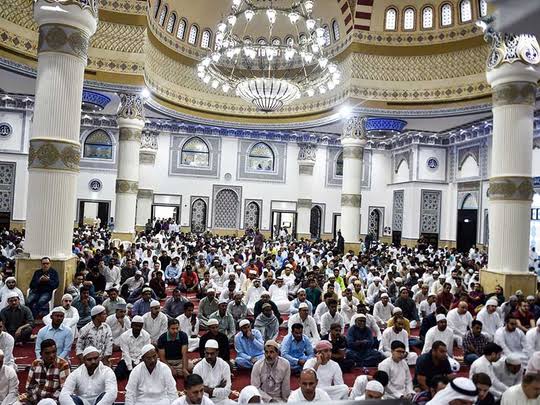
This post will be discussing 3 among the 6 frequently asked questions about solaatul Eid; and the part 2 will discuss the remaining 3 in shaa Allah.
Question One:
When should the tekbeeraat be said?
Answer:
There are two valid sayings as regard when the tekbeeraat be said in the solaat.
The first opinion: The tekbeeraat should be said after the dua istiftaah. Meaning: The worshipper will say the tekbeer ihraam first; then say the dua istiftaah, and continue with other tekbeeraat. Then isti’aadhah(audhu billahi minash shaytaani rajeem) and basmalah, and recitation of faatihah and surah.
And this is the opinion of the Hanafiyyah, Shaafi’iyyah and a narration from Imam Ahmad.
Their evidence is that dua istiftaah was legislated for solaat, and it should be said at the first step of solaat, then tekbeeraat come after it; and isti’aadhah, basmalah and recitation.
Imam Nawawi said: “Our opinion is that other tekbeeraat come after dua istiftaah before isti’aadhah”.
The second opinion: All the tekbeeraat are to be said before dua istiftaah. Meaning: the worshipper will start with tekbeeratu ihraam, then other tekbeeraaat; dua istiftaah follows and isti’aadhah and recitation.
And this is a narration from Imam Ahmad.
And their evidence is that isti’aadhah follows dua istiftaah and that is before the recitation.
The most correct: The two opinions have valid evidences buttressing them and any chosen one is correct bi idhni Allah.
Question Two:
How many tekbeer are in solaatul Eid?
Answer:
This is also a differed upon question among the Jurists. And the valid opinions can be summarized into 3 forms.
The first opinion: the tekbeer of solaatul Eid in the first rak’ah is 3 (exclusive tekberatul ihraam). If tekbeeratul ihram is added, that makes 4.
And in the second rak’ah, 3 tekbeeraat after the recitation and before rukuu’.
And this is the position of the Hanafiyyah and a narration from Imam Ahmad.
And their evidences are narrations from Abdullah Ibn Mas’uud radiya Allahu anhu, that he made four tekbeeraat, then he recited and went to rukuu’ in the first rak’ah; and in the second rak’ah, he also said 4 tekbeeraat (the tekbeer of rising inclusive). And Ibn Hazm authenticated this report in his Mahallaa volume 5 page 83. There is also a similar narration from Abdullah Ibn Abbas radiya Allahu anhumaa.
The second opinion: the tekbeer of solaatul Eid is 7 in the first rak’ah(tekbeeratul ihram inclusive); and 6 in the second rak’ah(the tekbeer of rising inclusive).
And this is the position of the Maalikiyyah and Hanabillah.
Their evidence is the narration of Ibn Umar (radiya Allahu anhumaa) who said he witnessed solatu Duhaa and Eid with Abu Hurayrah and he made 7 tekbeeraat in the first rak’ah before the recitation, and in the second rak’ah, 6 tekbeeraat before the recitation. This narration is recorded by Abu Daawud in his sunan and Imam Tirmidhi in his Jaam’i.
A similar narration from Aaisha radiya Allahu anhaa that the Prophet would made 7 tekbeeraat in the first rak’ah and 5 tekbeeraat in the second rak’ah (exclusive the tekbeer of rukuu’). Recorded by Abu Daawud, Ibn Maajah.
The third opinion: the tekbeer of solaatul Eid is 8 (inclusive tekbeeratul ihraam)in the first rakah; and 6 tekbeeraat in the second rak’ah (the tekbeer of rising inclusive).
This is the opinion of the Shaafi’iyah and adopted by IbnAbdil Barri in his Kaafii and Ibn Hazm in his Mahallaa.
And their evidence is the narration of Ibn Umar who said he witnessed solaatul Duhaa and Eid Fitr with Abu Hurayrah and he made 7 tekbeeraat (exclusive tekbeeratul ihraam) in the first rak’ah and 6 in the second. And the Shaafi’iyah said the narrator of this hadeeth narrated the tekbeeraat without mentioning tekbeeratul ihraam and the tekbeer of rising to the second rak’ah.
The most correct: if we study the evidences further, we will discover this has been a matter of differences among the sahaabah and it is correct to say all the 3 opinions are correct because the tekbeeraat itself are not a condition of the solaat.
Question Three:
Should the hands be raised alongside the tekbeeraat?
Answer:
The differences on this can be summarized into two opinions:
The first opinion: the worshipper will raise his hands along with the tekbeeraat.
And this is the saying of the Hanafiyyah, Shaafi’iyyah and Hanabillah; and a narration from Imam Maalik.
Their evidence is the analogy(Qiyaas) of the tekbeeraat with the tekbeer of ihraam and rising; and they justified this by saying all occur while standing and the hands are raised.
Another evidence is the narration of Umar bn Khattab radiya Allahu anhu, that he does raises his hands along with the tekbeeraat in solaatu jinaazah and the two Eid. Recorded by Bayhaqii in his Kubraa. And also a similar report from Ibn Umar.
And many of the salaf and contemporary scholars are of this opinion.
The second opinion: the hands should not be raised along with the tekbeeraat. And this is the opinion of the Maalikiyyah.
And they argued that there is no authentic sunnah that says the hands should be raised along with the tekbeeraat. Ibn Hazm Az-Zohiriy adopted this opinion also in his Mahallaa volume 5 page 128.
Sheikh Al-Albaani considered the hadeeth of Ibn Umar quoted as weak while Sheikh Ibn Baaz considered it authentic.
The most correct: The Qiyaas of those who do not see wrong in raising the hands along with the tekbeeraat are correct; and those who argued the hadeeth of Ibn Umar as da’eef, there are reputable scholars like Ibn Baaz, Ibn Qudaamah, Imam Tahaawiy, Ibn Qayyim and others who considered it authentic and that is one of the ikhtilaaf in authentication of hadeeth. So far there is no explicit evidence against the raising of the hands alongside the tekbeeraat, the easiest of the two opinions for individual is correct in Shaa Allah.
The other 3 questions will be continued in the part 2 in Shaa Allah.