
There are gimmick around Hadith authentication. Most scholars who regarded an Hadith to be Da’eef had accepted as Sahih an Hadith with similar chain if it is tandem to his inclination.
Most Saudi scholars consider it Da’eef (weak); but Sheikh al-Albaani disagreed and said it is authentic in his صحيح الترغيب و التهريب.
I don’t take serious nowadays all these Da’eef /Sahih controversies; there is lack of sincerity in the recent Hadith authentication. That is why a Faqih is superior to a Muhadith (in many extent).
There are several Daeef Hadith that is unavoidable used today by the Muslim Ummah. Ibn Mulaqin, the teacher of Ibn Hajar specifically wrote a book on Daeef Hadith that are indispensable in Fiqh.
Tasheeh and tad’eef have principles according to science of hadeeth, which scholars deferred upon among themselves on those principles also.
Exactly, most especially nowadays when political consideration are becoming yardstick for Hadith authentication. You hear the Hadith legitimizing the Palestine struggle is Daeef, but the Hadith of correcting the ruler privately is Sahih, yet they are both of same magnitude of Isnad.
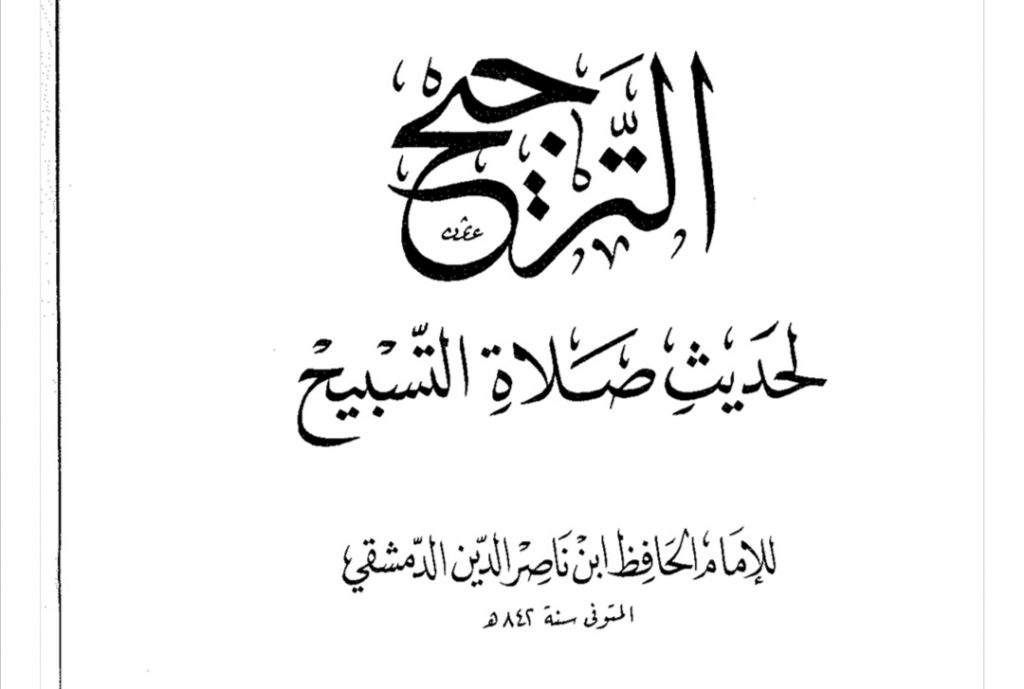
There is also a book titled:
“الترجيح لحديث صلاة التسبيح”
The scholar who did the Tahqeeq is Sh. Mamduh. He is an outstanding scholar of Hadith and a very tough scholar for Salafiyyah in the science of Hadith. He had written several books on many errors of Shaykh al-Albaaniy authentication of Hadith.
He said the Hadith of Tasbih is Sahih; you can request for it to read or simply download the book.
In Shaykh al-Albaani’s صحيح الترغيب و الترهيب Page 424, Hadith No 677. The hadeeth of Salaatu Tasbeeh is there and graded sohiih.
It is also explained in his Sahih Abu Daud, Mishkat, Sahih Ibn Majah and several of his Tahqiq, I have all the books here.
Shaykh Muqbil also said it is Hassan. They are their Salafee Sheikh.
Shaykh Ibn bazz and Uthaimin said it is Daeef and Bidiah. But if the Hadith should be Daeef, then the Hadith of 73 sect in hell and one in Paradise should also be Daeef because the chain of salatul tasbih is even more reliable than Hadith of Iftiraq.
Hadith authentication is just cunny at times; and that is what our salafi brothers fail to understand.
Imam Malik had an authentic Hadith in his Muwatta and he regretted ever including such Hadith in his book. The hadith that some group of people will come to Alkawthar on the day of resurrection and they will be shoved aside, to which the Prophet will say “These are my Ashaab (companions), but the Angels will respond back ‘You do not know what they did after you had left.’
The Shiites were using this hadith to justify their claim that the Sahaabah became something else afterwards. So Imam Malik regretted including the Hadith as said by Imam Shafii.
Look at Sifat Salat Nabiyy, despite Sh. Albani’s effort to restrict to Sahih Hadith, yet his Sifat Salat contains Daeef Hadith which caused him to have erroneous conclusion in the book.
So, Solaatu Tasbeeh is sunnah and recommended. Do not be fooled by mere declaration of its hadeeth as do’eef while the field of science of hadeeth is wider than they may think.
The hadeeth is from i’kromah, from Ibn Abdullah Abbas (ridwaanu Allahi alayhim), related by Abu Dawud, Ibn Maajah, Ibn khuzaymoh in his sahiih.
Reading those books I mentioned will make you know that the hadeeth of solaatu tasbeeh isn’t do’eef as well explained by Muhadithoon….
If you haven’t read all mentioned texts, pls, do yourself a favour of reading before arguing……
“و لكلّ وِجهة هو موليها” !!!
Written February, 2018.
3 Responses
Jazakumullahu khairan. May Allah continue to reward you abundantly.
Please, i need your write up on rosary usage as i can’t find it anymore on this website. Can you kindly send it to my email sir?
I anticipate your always kind gesture. Thanks.
For detailed article on use of rosary, check my book “Resolving The Controversies” Chapter One.
This your research work is so superb as it is an eye opener to knowledge. Please, continue in this your act of research as i am sure many people around the globe like me wants more. Jazakumullahu khairan.