
Fidau which means redemption.
Linguistically, it is an act whereby relatives or friends of a deceased gather to invoke Allah with a view to saving the deceased from sins by invoking some prayers, seeking for the forgiveness of his or her sins and giving or doing charitable acts on its behalf. This is undoubtedly an act of ibaadah (worship) but the how and forms of its performances vary with locations and environment.
Fidau starts right from the recitation of the Qur’an by the grave as the deceased is being laid. Being a common act in some environment, I will therefore begin this discourse with it.
The Islamic ruling on reciting Qur’an by the grave during the burial rite:
Many Scholars permit recitation of the Qur’an by the grave of the deceased. They posit that it is not a prohibited that. This is the position of the majority of scholars from the Shafi’i, Hanafi, and Hanbali schools of jurisprudence. They regard such act as recommended and praiseworthy. Meanwhile, there are scholars who opine otherwise and conclude such is impermissible.
The opinion of permissibility is based on the hadith narrated by Anas who said,
“من دخل المقابر فقرأ سورة يس خفف الله عنهم، وكان له بعدد من دفن فيها حسنات”
Meaning: “Whoever enters a cemetery and recites the chapter of Yasin, the plight of the deceased is reduced and they receive a reward, equal to the amount of the people present at his graveyard (for prayer)”.
Those who hold to the opinion of its impermissibility consider the above hadith weak; while those who quote the hadith argue in contrary. This particular hadith and other related one were reported by Imam Abu Bakr Al-Khalaal Al Hanbaliy (d.311AH) in his book “Al Jaami’u”, and also Imam Shamsudeen Al-Maqdisi, and Imam Qurtubi (d.671AH) in his book “التذكرة بأحوال الموتى وأمور الآخرة”, and Imam Suyuuti (d.911 AH) in his book “شرح الصدور بشرح حال الموتى والقبور” and many others.
Also, it was soundly narrated on the authority of Ibn Umar and recorded by Imam Tabraani in his Mu’jamu Kabeer that the Prophet advised [Muslims] to recite Surah Al-Fatiha and the concluding verses of Surah Al-Baqarah at the grave of the deceased.
Similarly, they also based their argument on another evidence in the hadith of Ma’qal bn Yasaar which says the Prophet said: “recite Yasin on your deceased”. Reported by Imam Ahmad, Abu Daawud and Ibn Majah. Graded sound by Ibn Hibban. Imam Qurtubi said in his “التذكرة” that “and the meaning of this hadith is that, it should be recited by the grave of the deceased while he is being buried”.
There are many other evidences cited by those who favored this view.
As for the Maliki School, they are of the opinion that it is not permissible to recite the Qur’an at the grave of a deceased. However, Sheikh Ahmad Dardir (A Maliki scholar) said, “The later scholars of the Maliki School held that there is nothing wrong with reciting the Qur’an and invocations and donating their reward to the deceased – as the reward will, In Shaa Allah reach them.”
It’s obvious that the scholastic debate on the impermissibility of this issue is weak, while the argument on the recommendation of what is to be recited with its permissibility is stronger and supported by many narrations from the Salaf. Hence, jurisprudentially speaking, the one who is not convinced may choose to jettison it, but such should not create unnecessary distractions and name-calling since those who choose to do it have enough evidences.
Some scholars further argued that the issue on the permissibility of recitation by the graveyard while the deceased is being laid in the grave remains the consensus. One such scholar who held this position is Ibn Qudama al-Maqdisi as he wrote, “Some scholars have stated that if one recites the Qur’an for the deceased, or donates the reward of its recitation to them, the reward is for the reciter and the deceased, as if they (the deceased persons) were present and we hope for mercy for them and us. What we have written here is the consensus of the scholars of Islam, as in every time and place, they gather to recite the Qur’an and donate its reward to their deceased without censure.”
Consensus on this issue has also been documented by Sheikh Uthmani who said, “They [the scholars of Islam] have reached a consensus that asking for forgiveness, supplicating, giving in charity, performing pilgrimage, and manumitting a slave on behalf of the dead benefit them and the reward of all of these actions reaches them. Also the recitation of the Qur’an at the grave is recommended.”
Scholars have documented that the reward of Qur’anic recitals reaches the deceased based on the pilgrimage made on behalf of a deceased and the reward of it reaching him. The pilgrimage consists of prayer and prayer consists of Quranic recitations, and whatever reaches in full reaches in part. Therefore, the reward of Quranic recitals reaches the deceased by the permission of Allah especially, if the reciter asks Allah to convey the reward to them.
Based on the above, the vast majority of scholars have maintained the permissibility of reciting the Qur’an for the deceased. The majority of scholars hold that the reward for such recitations do reach the deceased. The Shafi’iyyah scholars added that the reward reaches the deceased as a supplication such that the reciter says, “O Allah! Give the like of the reward for this recitation to so-and-so” and not the actual action itself.
As for whether the dead hears whoever addresses them among the living, the most reliable opinion held by the scholars is that it is true (Allah’s willing).
Ibn Taymiyah rahimahu Allahu said: “generally the dead person hears the speech addressed to him, but not all the time; rather he may hear it in certain conditions and may not in others. And this kind of hearing is that of perception not response”.
Ibn Al-Qayyim Al-Jawziy quoted Ibn Abdil-Barr as saying: It was verified that the Prophet said: Whenever a Muslim passes by the grave of someone whom he knows in life and salutes him (say As-salamu Alaikum) Allah will return the soul of the dead person to respond to the salutation. [This can be found in Kitab Ar-Rooh Volume 1]
Scholarly differences of opinion on this issue are slight and it is not worthy to engage in any argument or controversy on it.
This is the first part to be discussed as regard the topic of Fidau.
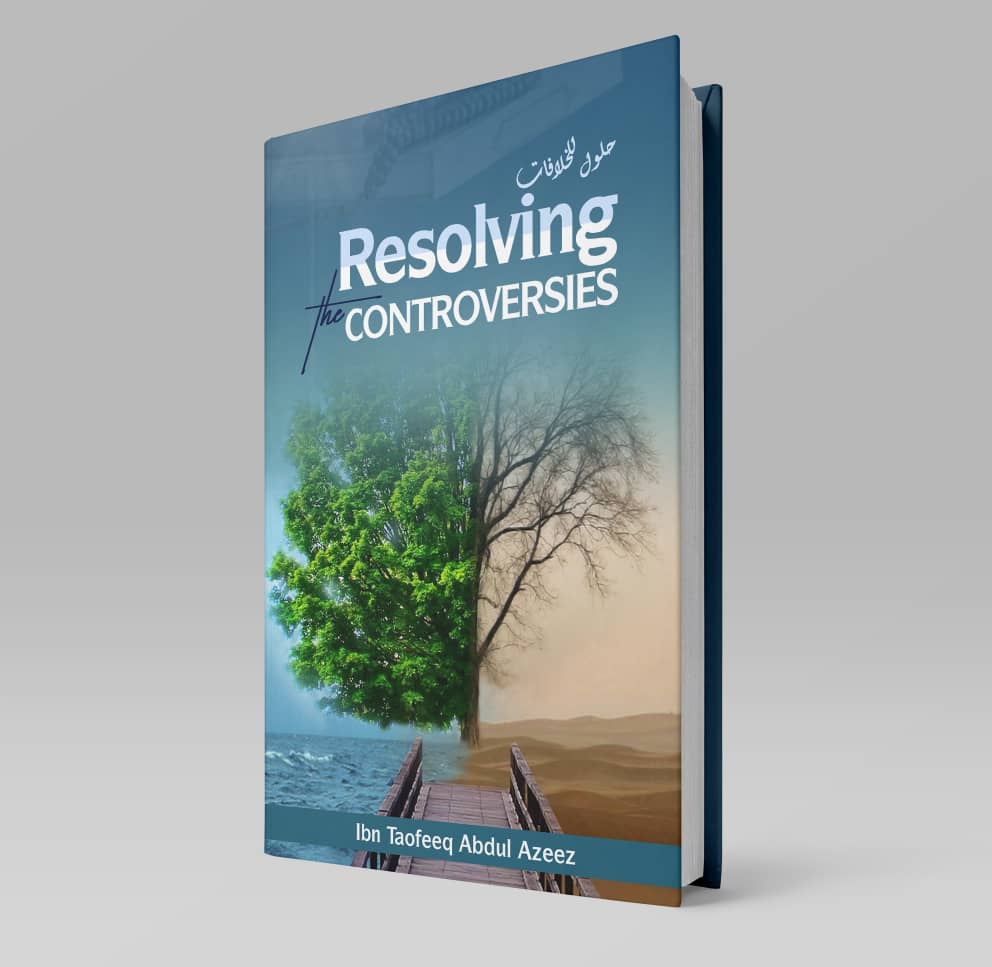
The other parts which entail the ruling of waiting for three days before offering prayers (duau) for the deceased and offering prayers on the third day, the eight day or the fortieth day; the ruling on the funeral meals; Fortieth Day For; Joint prayers for the deceased; are discussed in the book “Resolving the Controversies”.
The softcopy of the book is now available for purchase; likewise the hardcopy. Contact +2349077175275 via WhatsApp to get the softcopy; or you contact me.
More interesting topics in the book (Resolving the Controversies) include: The Correct Muslimah dressing; Picture Photographs: Islamic Perspectives; Ruling of garments hanging below the ankles; Keeping or trimming of the beards; cultural greetings: Prostration and Kneeling down; and Entrenching Harmony and Juristic Differences.
One Response
This is a well researched inetellectual job. An intellectual of this generation you are. Would have liken you to JOHN GRISHAM or FREDRICK FORSYTH.