
Abu Hurayrah narrated the authentic hadeeth which says: “At the beginning of every century, Allah will send to this ummah someone who will renew its religious understanding.”
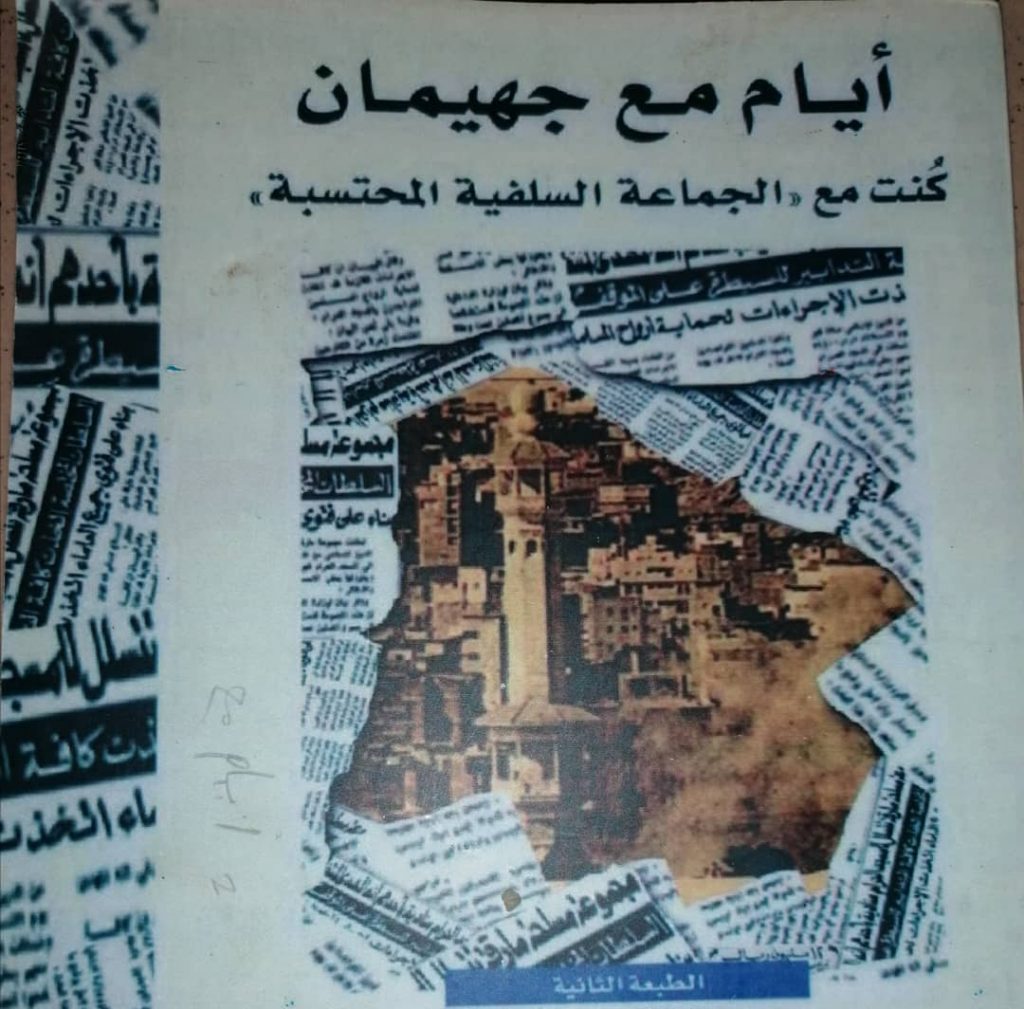
On a new century day, the first of al-Muharram 1400AH, that is 43yrs ago, the Masjid Al-haraam in Makkah experienced a terrible seizure led by a Saudi militant (Juhayman Utaybi) and his men.
The great mosque was seized by a group of 500 men under Utaybi’s leadership, included are several women and children who had joined Utaybi’s movement. A siege lasted more than two weeks before Saudi special forces broke into the mosque.
It was some minutes to start salaatul fajr when the worshippers were interrupted by insurgents who produced weapons from under their robes, chained the gates, shut and killed some policemen who were not listening to them. They took defensive positions in the upper levels of the mosque, and sniper positions in the minarets, from which they commanded the grounds. No one outside the mosque knew how many hostages remained, how many militants were in the mosque and what sort of preparations they had made.
Juhayman claimed his justification for the siege was that the House of Saud had lost its legitimacy through corruption and imitation of the West, and in tandem with the hadeeth of the Prophet, the Mahdi (renewer/redeemer of Islam) has arrived in the form of his brother-in-law Muhammad Abdullah Al-Qahtani and called on the Muslims in the mosque to give bay’ah (allegiance) to him. His followers embellished the fact that Al-Qahtani’s name and his father’s name are identical to Prophet Muhammad’s (salla Allahu alayhi wa sallam) name and that of his father, and developed a saying, “His and his father’s names were the same as Muhammad’s and his father’s, and he had come to Makkah from the north”, to justify their belief.
The revolution ended two weeks after the takeover began by the Saudi Special Forces, advised by GIGN French commandos and the mosque was cleared. Al-Qahtani was killed in the recapture of the mosque while Juhayman and 67 of his fellow rebels who survived the assault were captured and later beheaded.
The king secured a fatwa from the Council of Senior Scholars which found the defendants guilty of seven crimes:
1: Violating the Grand Mosque’s sanctity.
2: Violating the sanctity of the month of Muharram.
3: Killing fellow Muslims and others.
4: Disobeying legitimate authorities.
5: Suspending prayer at Masjid Al-haraam.
6: Erring in identifying the Mahdi.
7: Exploiting the innocent for criminal acts.
The Saudi government during the Juhaiman saga accused the Yemen Salafi scholar, Sh. Muqbil al-Waadi’ee of being the author of Juhaiman’s books and he was imprisoned for three months before he was deported to his country Yemen. Although Sheikh Ibn Bazz used to send some token fund to him for his madrasah in Yemen when he was deported.
For this reason, he kept criticizing the Saudi government because he felt they treated him unjustly until when he said he recanted. Why did he recant?
In his book titled “Mashaahadatii fi mamlakatil arabiyyah” with preface by Sh. Yahya Hajuri (a student and successor of Sh. Muqbil in Damaj, Yemen), while Muqbil fell sick, Sheikh Ibn Baaz facilitated his medical trip to Saudi. And while he was receiving free medical treatment in Saudi, he said he recanted from all his criticism of Saudi Arabia government.
Most of the Juhaiman’s “Jamaa’atu Salafiyah Muhtasibah” men were the boys of Sheikh Ibn bazz who considered Sh. al-Albaani also as their teacher.
It is the partnership between Sheikh Ibn bazz and Sheikh al-Albaani that metamophosized into present day salafiyyah ilmiyyah.
Sh. Ibn bazz is to Juhaiman as the former mufti before Ibn bazz, Sh. Ibrahim is to Ikhwan militia. They share their ideas but reject their arm rebellion. Just like Sh. Ibrahim was lenient to the Ikhwan militia, so was Ibn bazz lenient with the Juhaiman’s group.
He is Sheikh Muhammad bn Ibrahim Al Sheikh, the Mufti before Ibn bazz. He is the teacher of Sh. Ibn bazz, and arguably the first mufti of the modern Saudi State.
In the book Ayyaam min hayaati by Zaynab Gazali, she mentioned her discussion with him with respect to allowing female education. And this was before Juhaiman because Juhaiman group were Ibn bazz boys. The father of Juhaiman was among the leaders of the Ikhwan militia who felt betrayed by king Abdul Aziz.
The first Mufti would attend Ikhwanul Muslimeen programme as mentioned by Naasir AlHuzaimiy.
The Nigeria Salafiyyah factions out of ignorance were claiming Juhaiman was influenced by Ikhwanul Muslimeen; while Juhaiman was at the forefront of criticizing Ikhwanul Muslimeen. Whenever the consequence of their false manhaj becomes threatening and apparent, they quickly lump them to Ikhwanul Muslimeen.
They likewise blame Sayyid Qutb for Takfir and terrorism because no institution is writing to defend sayyid Qutb, while Muhammad bn Abdul Wahab is the major culprit who laid the foundation of Takfir and terrorism against fellow Muslims. But there is oil money to redeem him.
Similarly, in the same year (1979), there was a revolution in Iran. The Shiites had also been docile and kept quiet of tyrant rulers; they left themselves to be oppressed by tyrant rulers because they believe that Mahdi would soon come to alleviate their suffering. Then in this year, Khomeini came with the doctrine of wilayatul Faqih, and so they were able to revolutionalise against the Shah of Iran who had been using religion to enslave them to submission.
The Iranians had been Shiites for centuries and their successive tyrannical regimes also have their own palace scholars who justify the attoricites, so Khomeini was a Shiite revolutionist but unfortunately he is a partisan bigot who had also inherited the Shiite bigotry.
Khomeini was partly influenced by the Ikhwanul Muslimeen activism and he personally translated Milestone of Sayid Qutb. So, the tyrant rulers of the sunni world became afraid that the freedom of Shiites from Shah may be replicated in the sunni world by freeing themselves from tyranny, so the tyrant rulers engaged palace scholars and since the 1440 period, they began sponsoring scholars to write against Jamaa’ah (Islamic societies); Protest; Silence when oppressed and etc.
In this age, the greatest affliction of the Ummah is neither ignorance nor lack of love or brotherhood. It is neither the dearth of intellect nor non-availability of resources. It is rather al-Guluw (extremism)! It is for this reason that the very group which considers itself to be Firqatul Najiyah (The Saved Sect) take to unprecedented rancour and in-fighting (among themselves) – accusing one another of deviancy.
Revolution and terrorism will not bring back the Islamic caliphate. We need to understand the true teachings of the Prophet’s da’wah, tolerate ourselves the more, unite our voices against oppression, shun extremism, and stand firm in morality and spirituality.